All Dungeon Crawler Carl Books Ranked, Best to Worst
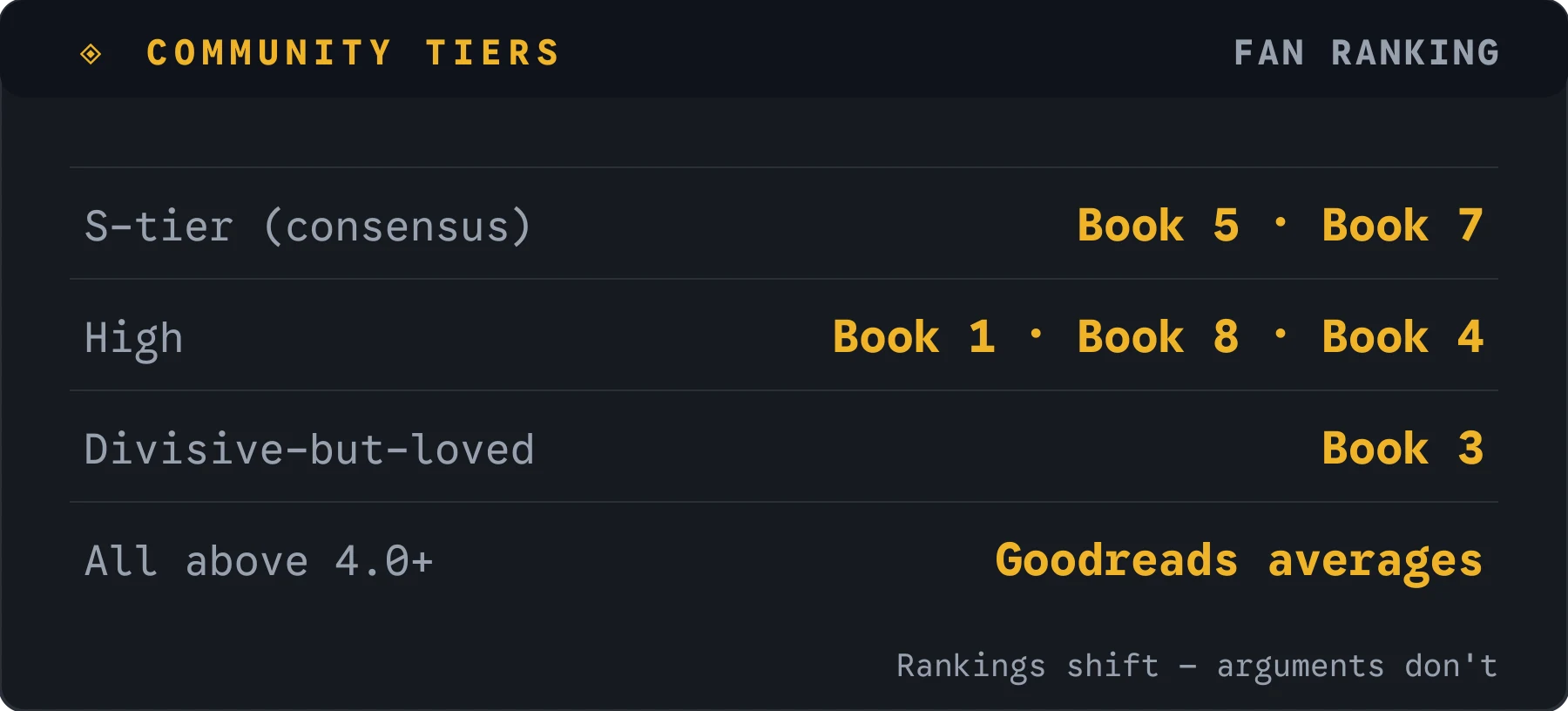
Eight published Dungeon Crawler Carl books, one eternal fandom argument: which is best? This ranking synthesizes Goodreads rating data and community consensus (r/DungeonCrawlerCarl, r/ProgressionFantasy, and the Web Cafe circuit) into the current standings — with the caveat the series itself would appreciate: the rankings shift, the arguments don’t.
Ranking a series this serialized is inherently spoilery territory. This list keeps plot details out; the linked guides for each book go deeper with warnings.
The Ranking
1. The Butcher’s Masquerade (Book 5) — The consensus action peak. The masquerade floor cashes in every system the first four books built, and the set-piece craft converts skeptics into superfans at a measurable rate. When fans recommend “the book that hooked me,” this is the most common answer. Full guide: book 5.
2. This Inevitable Ruin (Book 7) — The award winner. Dragoncon Best SF Novel 2025, NYT Audio Fiction #2, the longest book to that point, and the volume where Volteeg debuts in POV chapters. Its length divides first-readers; its ambition unites re-readers. Guide: book 7.
3. A Parade of Horribles (Book 8) — The newest entry and the biggest launch: the Floor 9 descent that begins the endgame, with the franchise’s full 14-million-copy momentum behind it. Early consensus puts it top-three, with recency bias arguments running both directions. Guide: book 8.
4. Dungeon Crawler Carl (Book 1) — The Clarke Award-nominated debut that does the hardest job in fiction: making a ridiculous premise inevitable. Its 4.4+ average across half a million ratings is the series’ foundation. Guide: book 1.
5. The Gate of the Feral Gods (Book 4) — The emotional escalation: Imani’s Station 36 defense, the Hekla-Katia detonation, and god-tier stakes. The book that proved the series could hurt you. Guide: book 4.
6. Carl’s Doomsday Scenario (Book 2) — The class-selection floor that builds the cast. Underrated on first read — its choices are still detonating in book eight. Guide: book 2.
7. The Eye of the Bedlam Bride (Book 6) — The horror-toned haunted-carnival volume with Patrick Warburton’s legendary audio cameo. Ranks lower on first reads, higher on re-reads — the tonal swing is the point. Guide: book 6.
8. The Dungeon Anarchist’s Cookbook (Book 3) — The divisive train floor. Last place in first-read rankings, recovering strongly in re-read rankings once its structural experiment makes sense. Essential regardless — the cookbook is the series’ central lore object. Guide: book 3.
The Ratings Data
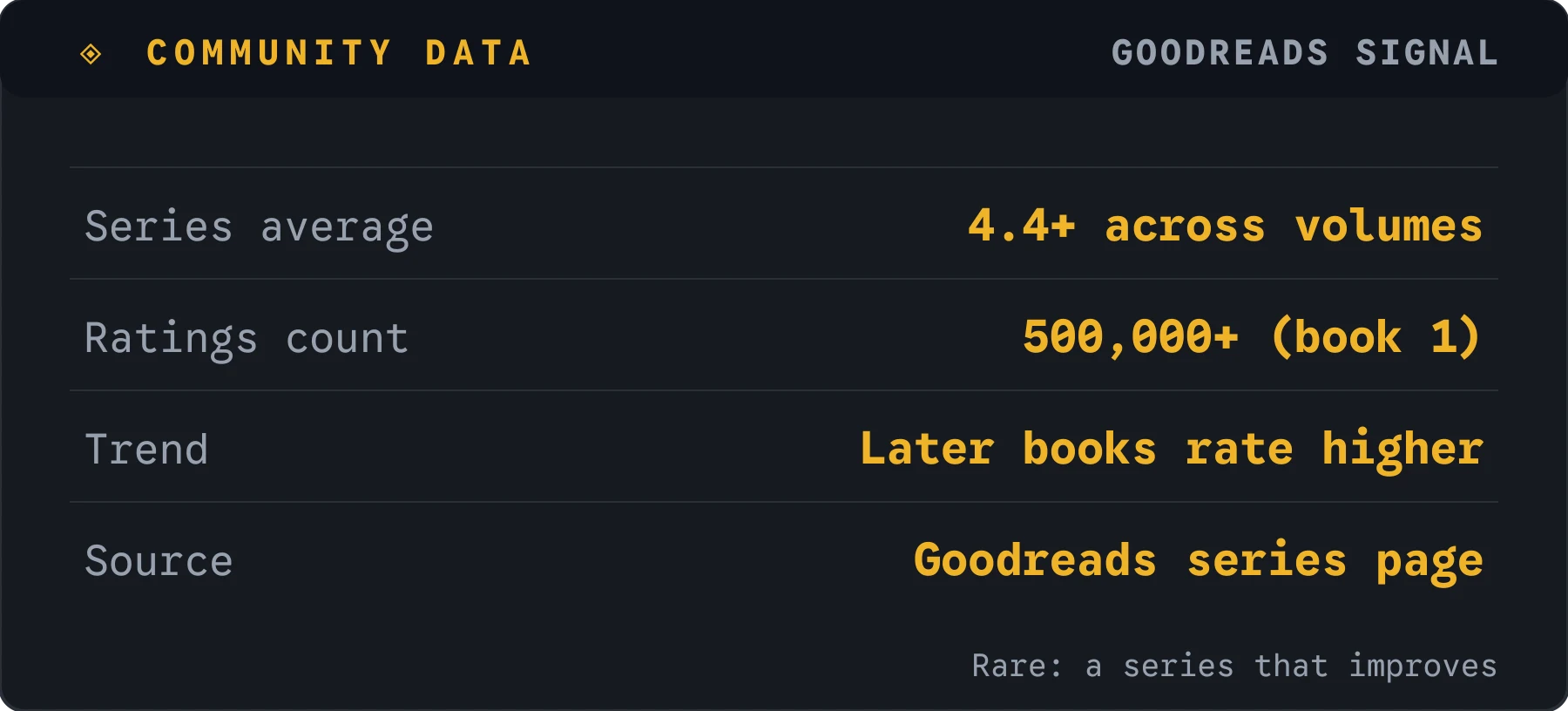
The remarkable thing in the data: the series improves as it goes by community rating — later volumes rate higher than earlier ones, which is vanishingly rare for long genre series. Book one’s 4.4+ average across 500,000+ ratings is the floor, not the ceiling.
Why the Rankings Keep Shifting
Three forces move these standings:
- Re-read inflation. Books three and six climb on re-reads as their structural choices reveal intent.
- New-reader waves. Every TV news cycle sends fresh readers through in order, temporarily boosting early books.
- Recency. Book eight’s ranking will settle as launch enthusiasm cools — and as the two-part finale recontextualizes it.
Which Should YOU Read First?
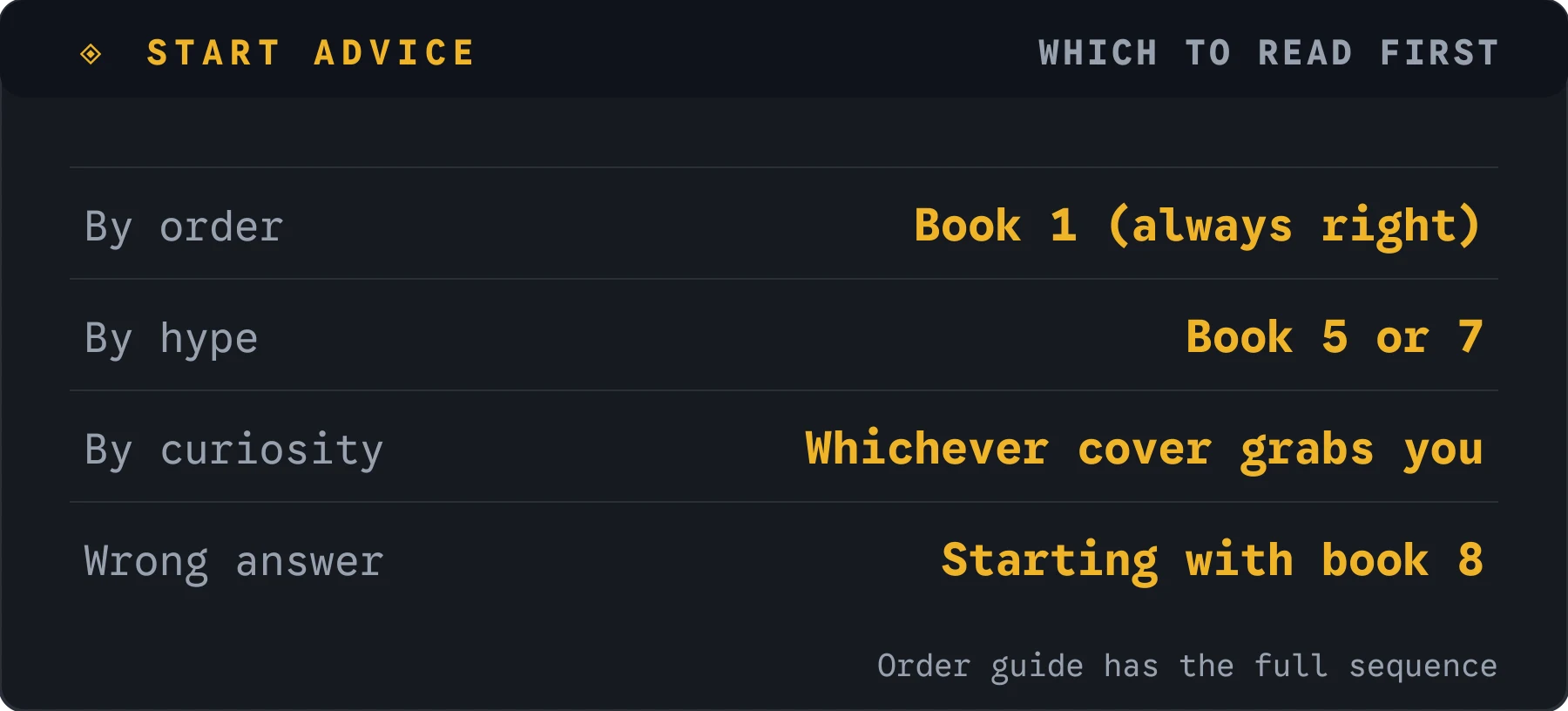
The rankings are for re-readers. For first-timers the answer never changes: book one, in order — our reading order guide explains why publication order is chronological order here, and the series overview is the front door.
If you’re choosing a re-read: book five for action, book seven for scope, book six for mood.
FAQ
Is book 3 really the worst?
“Worst” is doing heavy lifting — its average rating would be a career best for most series. It’s last in this ranking the way bronze is last on a podium with two Olympians.
Do the rankings include the bonus novella?
Backstage at the Pineapple Cabaret is edition-exclusive material, not a standalone ranked volume. Editions: comparison guide.
Will book 9 top the list?
The two-part finale is the betting favorite — the endgame every ranking since book five has been waiting for. Track it: book 9 guide.
Data sources
Goodreads series page ratings; community consensus across r/DungeonCrawlerCarl and r/ProgressionFantasy.
Methodology: How This Ranking Was Built
Rankings are arguments, so here is the argument’s structure. The list weights three signals: Goodreads average ratings (volume-level, sample sizes from hundreds of thousands for early books down to tens of thousands for book eight), community discussion sentiment across r/DungeonCrawlerCarl and r/ProgressionFantasy threads, and award/industry recognition (Dragoncon, NYT lists, Clarke nomination).
The weights matter: first-read ratings under-represent books whose value compounds later — book three’s train floor and book six’s tonal swing are the canonical examples. Re-read sentiment is given explicit upward correction, which is why neither lands last despite common first-read placement.
The honest caveat: book eight’s position is provisional. Its rating sample is youngest, and the two-part finale will recontextualize its ending in ways no current ranking can price in. This page re-ranks as data matures — same methodology, updated standings, no vibes.
Reader Notes for the Ranking
Use-case note: rankings answer “which re-read?” — they do not change reading order. New readers start at book one regardless of this list; the reading order guide is the only sequence that matters for a first pass.
Disagreement note: the most common ranking disputes involve book three (re-readers defend it) and book six (mood-dependent). If your personal list differs, you are in the majority — every position on this list has a passionate constituency.
Update note: the list re-scores as rating samples mature, especially for book eight and the upcoming finale. External data: Goodreads.
Does the ranking consider the audiobooks separately?
No — performance quality is a production achievement, not a writing difference. The audiobook guide covers those merits; this list ranks the books.